


What is Basic Bundle Insulation? | Basic Waterproofing
Foundation envelope waterproofing is one of the most important waterproofing applications that protects the foundation and reinforced concrete retaining wall surfaces below ground level against water in a continuous manner. Especially in buildings with basements, underground car parks, elevator pits, raft foundations and areas with groundwater risk, a properly applied waterproofing system helps the structure remain long-lasting and safe.
The foundation zone is one of the most critical parts of the structural system. Since this area remains below ground, later intervention is both difficult and costly. For this reason, foundation waterproofing must be carried out during construction with the right material, correct detailing and professional workmanship.
In this article, we explain what foundation envelope waterproofing is, how it is applied, which materials are preferred and which critical details should be considered during application in a clear but technical language.
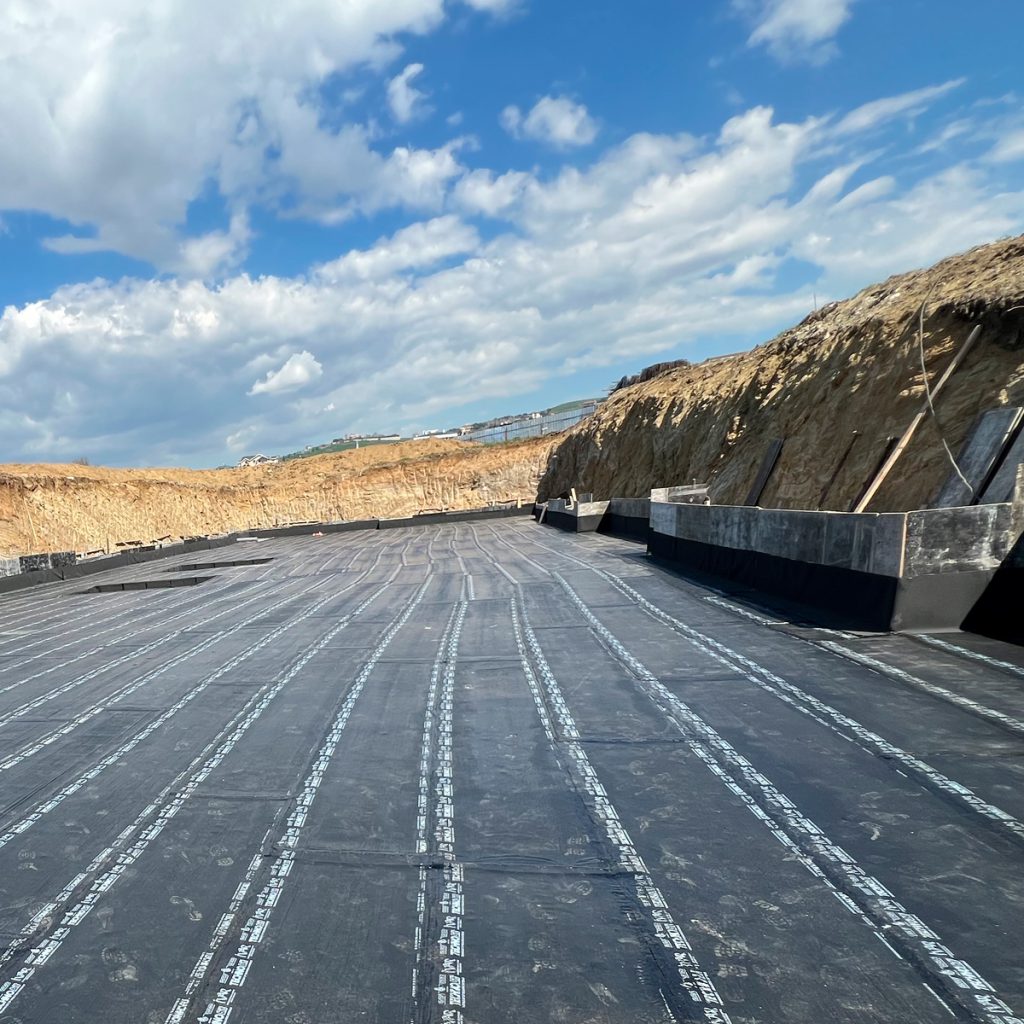
Foundation envelope waterproofing provides continuous protection for foundation and retaining wall surfaces against water.
What Is Foundation Envelope Waterproofing?
Foundation envelope waterproofing is the process of completely wrapping the foundation of a building and the reinforced concrete surfaces below ground level with a waterproofing membrane or suitable waterproofing materials. In this system, the foundation is enclosed like an envelope. This prevents water from penetrating the structure through the underside of the foundation, retaining walls or joint points.
Envelope waterproofing is applied not only to prevent water ingress, but also to protect reinforced concrete reinforcement against corrosion, prevent dampness and mould formation in basements, increase indoor comfort and extend the service life of the structure.
Why Is Foundation Waterproofing Important?
The foundation part of a building is constantly exposed to ground moisture, rainwater, surface water and, in some regions, groundwater. If waterproofing is not applied, water can penetrate through weak points in reinforced concrete surfaces. Over time, this may cause dampness, mould, paint blistering, bad odour, reinforcement corrosion and structural damage risks.
- Reduces the risk of corrosion in reinforced concrete reinforcement.
- Prevents dampness, mould and bad odour in basement floors.
- Reduces the risk of water leakage in elevator pits, car parks and storage areas.
- Protects the structural system of the building in the long term.
- Improves indoor comfort and quality of use.
- Prevents high repair costs that may occur later.
Where Is Foundation Envelope Waterproofing Used?
The envelope system is preferred especially in underground building sections that are at risk of contact with water. Application areas may vary depending on the soil condition, foundation type and intended use of the structure.
- Raft foundation systems
- Buildings with basements
- Elevator pits
- Underground car parks
- Retaining walls
- Storage areas, technical rooms and areas below plinth level
- Regions with high groundwater levels
- Retaining wall and foundation joint areas
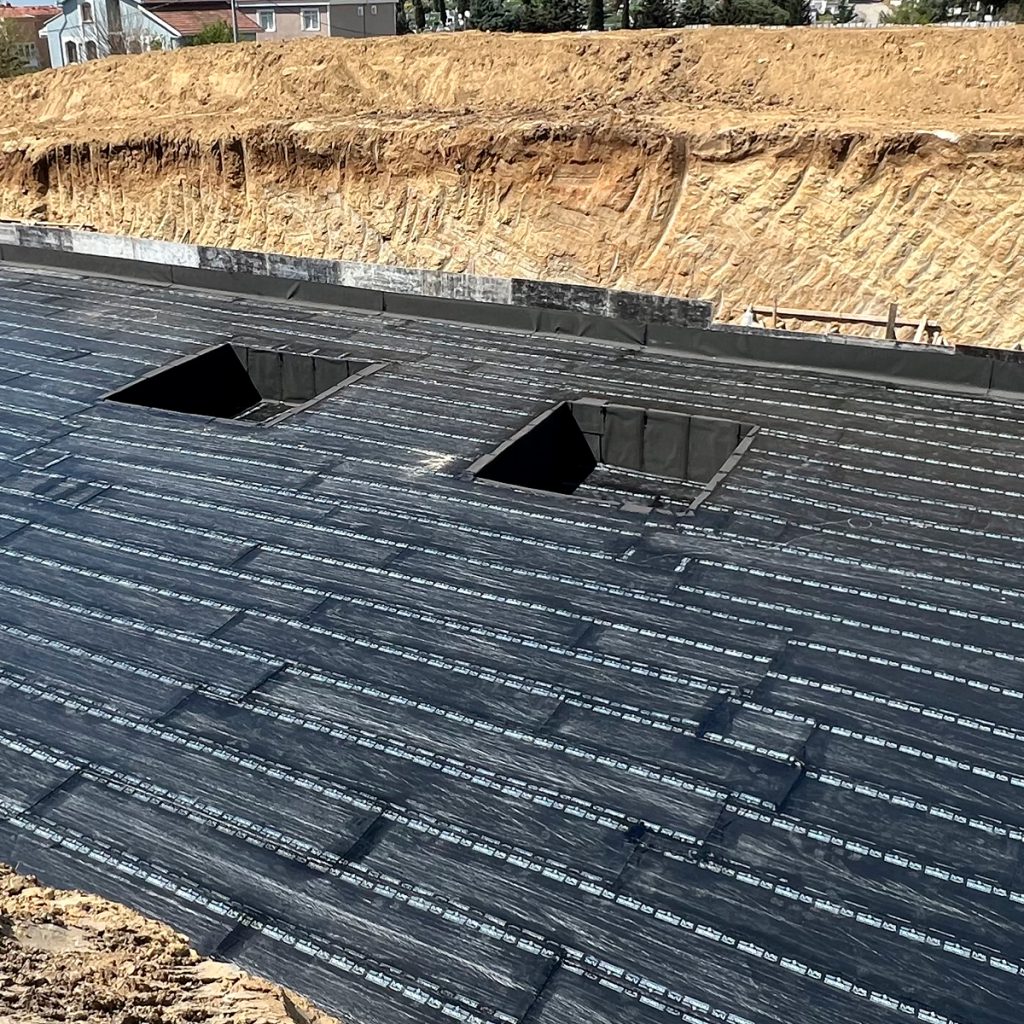
Waterproofing continuity must be preserved at raft foundation and retaining wall junctions.
How Is Foundation Envelope Waterproofing Applied?
Foundation envelope waterproofing should not be considered only as membrane laying. For a healthy application, surface preparation, primer, waterproofing layer, detail solutions, protection layer and drainage system must be evaluated together.
1. Soil and Project Analysis
Before starting the application, soil structure, groundwater level, foundation type, basement depth and drainage needs must be analysed. The system used in buildings with pressurised water risk should not be the same as the system used in buildings exposed only to ground moisture.
At this stage, foundation type, retaining wall height, expansion joints, service penetrations and the intended use of the building must be considered. Foundation waterproofing is not a standard process that can be solved with the same detail in every project.
2. Lean Concrete Surface Preparation
The lean concrete surface on which waterproofing will be applied must be clean, smooth and sound. Sharp protrusions, loose particles, dust, oil and residues that reduce adhesion must be removed. If there are defects that may damage the waterproofing material, they must be repaired before application.
If surface preparation is not done correctly, waterproofing performance decreases even if a high-quality material is used. Especially in membrane applications, sharp protrusions on the surface may cause puncture and tearing risks in later stages.
3. Primer Application
In bituminous membrane systems, primer is applied to increase surface adhesion. The primer must be spread evenly over the surface and sufficient drying time must be allowed. Membrane applications performed before the primer dries may cause adhesion problems later.
4. Application of the Waterproofing Membrane
During membrane application, overlap areas, joints and corner turns must be applied carefully. The waterproofing layer under the foundation must be turned continuously onto the retaining wall surfaces. If there is a break in the system, water can reach the structure from the weakest point.
The most important principle of the foundation envelope system is continuity. The underside of the foundation, retaining wall surface, corner turns, pipe penetrations and expansion joints should not be considered independently from each other.
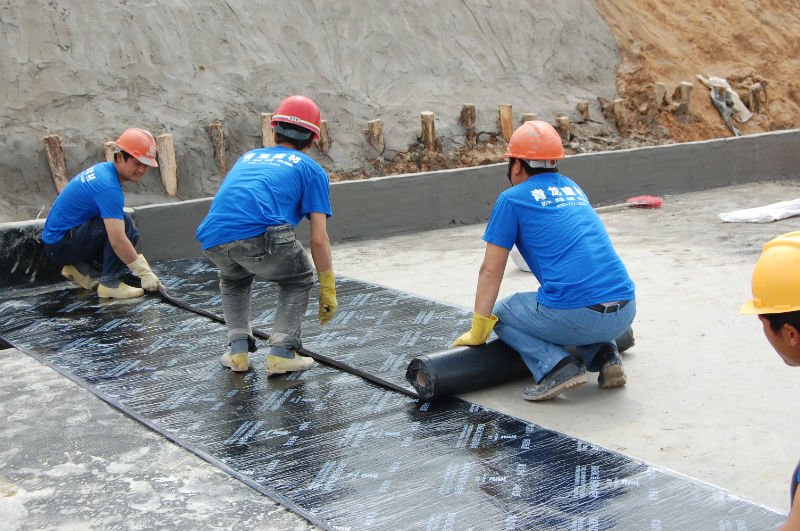
In membrane applications, joints, overlap areas and surface continuity directly affect the overall performance.
5. Retaining Wall and Joint Details
The points where the horizontal waterproofing under the foundation meets the vertical waterproofing on retaining wall surfaces are very critical. Internal and external corners should be chamfered, reinforcement tapes should be used and all junctions should be completely sealed.
A small application error at retaining wall-foundation junctions may appear later as water leakage in basement floors. Therefore, detail areas must be handled more carefully than standard surface applications.
6. Protection Layer and Drainage
After waterproofing is completed, a protection layer must be applied to prevent the membrane from being damaged by concrete pouring, reinforcement works, backfilling or mechanical impacts. Depending on the project, drainage boards, geotextile felt, protection concrete or suitable board systems may be preferred.
The drainage system helps remove water around the structure in a controlled manner. However, drainage never replaces waterproofing. Drainage is an auxiliary solution that supports a correctly applied waterproofing system.
Materials Used in Foundation Envelope Waterproofing
The material to be used in foundation waterproofing must be selected according to the soil conditions and water pressure risk of the structure. Using a single type of product for every project is not correct. Groundwater, backfill height, foundation type, basement usage and accessibility after application must be considered during material selection.
Bituminous Membranes
Bituminous membranes are among the most commonly used product groups in foundation waterproofing. With the correct primer, correct overlap and good workmanship, they provide high performance. Joints, corner turns and retaining wall junctions must be carefully checked during application.
Synthetic Membranes
PVC, TPO or HDPE-based membrane systems may be used in foundation, retaining wall, tunnel and below-grade waterproofing applications depending on project details. In these systems, the welding quality of the joints is very important. Welding errors directly affect the watertightness performance of the system.
Liquid-Applied Waterproofing Products
Cement-based, bitumen-rubber based or polyurethane-based liquid-applied waterproofing products may be preferred in detail areas, retaining wall surfaces or as an auxiliary waterproofing layer. Layer thickness, surface preparation and curing times must be carefully followed.
The Most Critical Details in Application
The key to success in foundation envelope waterproofing is creating a continuous waterproofing layer. Covering only large surfaces is not enough. Water usually enters through joints, corners, pipe penetrations or damaged points.
- Surface preparation: The application surface must be clean, smooth and sound.
- Overlap areas: Sufficient overlap must be provided at membrane joints.
- Joints: Membrane joints must be fully sealed and checked after application.
- Corner turns: Internal and external corners must be reinforced.
- Pipe penetrations: Service penetrations must be solved with special collars or waterproofing details.
- Expansion joints: Special expansion joint tapes must be used in movement joints.
- Protection: After waterproofing is completed, it must be protected against mechanical damage.
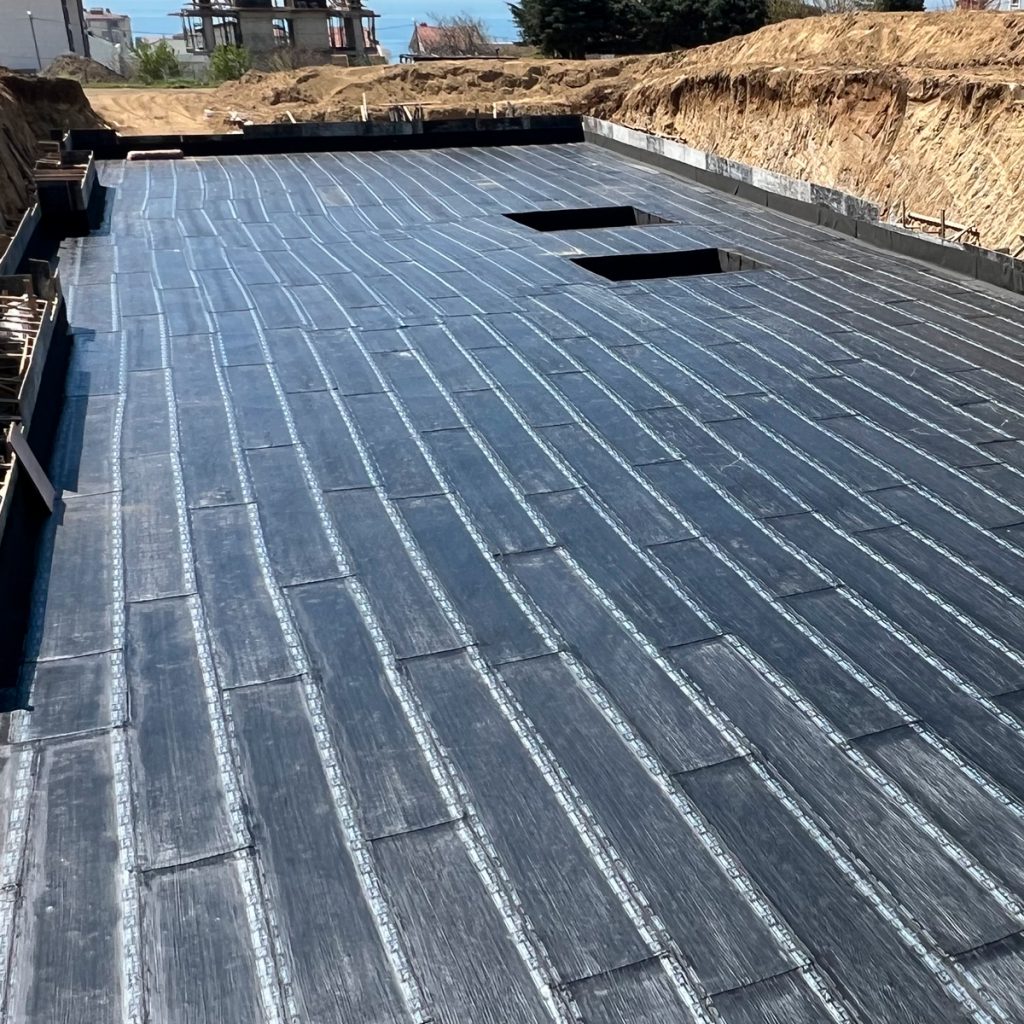
In foundation underside applications, membrane continuity, overlap order and protection layer are critical for long-lasting waterproofing.
Common Mistakes in Foundation Envelope Waterproofing
Mistakes made in foundation waterproofing may cause much higher costs after the building is completed. Therefore, the following mistakes should be avoided during application.
- Starting membrane application without surface preparation
- Not providing sufficient overlap at membrane joints
- Not using reinforcement at corners and junction points
- Treating pipe penetrations like standard surfaces
- Not applying a protection layer after waterproofing
- Considering drainage as a substitute for waterproofing
- Selecting the wrong material
- Proceeding to concrete or backfill works without post-application inspection
Does Drainage Replace Foundation Waterproofing?
No. A drainage system helps remove water around the structure in a controlled manner, but it does not replace waterproofing. For healthy foundation protection, drainage and envelope waterproofing must be considered together.
If the drainage system fails or becomes clogged over time, the structure may still be exposed to water pressure. Therefore, the main protection must always be a correctly applied, continuous waterproofing system.
When Should Foundation Envelope Waterproofing Be Applied?
The best time for application is during foundation and retaining wall construction, before the structure is buried below ground. After the building is completed, external intervention becomes very difficult. Therefore, foundation envelope waterproofing should be planned professionally at the early stage of construction.
Interior interventions after construction is completed usually provide temporary or limited solutions. For permanent and safe results, foundation waterproofing must be applied externally and continuously while the building is still under construction.
Pre-Application Checklist
- Has the groundwater condition and groundwater level been checked?
- Is the lean concrete surface ready for waterproofing?
- Is the material selection suitable for the soil conditions?
- Have foundation-retaining wall junction details been solved?
- Is a special waterproofing detail ready for pipe penetrations?
- Have expansion and movement joint details been determined?
- Has the protection layer after waterproofing been planned?
- Has drainage been included in the project if required?
- Will post-application inspection and damage detection be carried out?
Factors Affecting Foundation Envelope Waterproofing Cost
The cost of foundation envelope waterproofing varies according to the technical details of the project. Therefore, for accurate pricing, the application area must be inspected, soil conditions must be evaluated and the system to be used must be determined.
- Total application area
- Type of waterproofing material to be used
- Number of membrane layers and technical properties
- Groundwater pressure and drainage need
- Foundation and retaining wall details
- Density of pipe penetrations, expansion joints and corner details
- Protection layer requirement
- Site access and application conditions
Why Is Professional Foundation Waterproofing Necessary?
Foundation envelope waterproofing is an application that does not tolerate mistakes. Because after the application is completed, foundation and retaining wall surfaces remain below ground. Therefore, workmanship quality, detail solution and post-application inspection are as important as the material used.
In foundation waterproofing performed by professional teams, project conditions are analysed, the correct material is selected, critical details are solved specifically and the waterproofing layer is protected. This approach ensures that the structure remains safe against water for many years.
Conclusion: Foundation Waterproofing Determines the Life of the Structure
Foundation envelope waterproofing is a critical application that should not be neglected for a long-lasting, safe and healthy structure. With the right material selection, correct detailing and expert application, strong protection against water can be provided in the foundation area.
As Argesan, we provide project-specific technical support for foundation waterproofing, envelope waterproofing, retaining wall waterproofing, drainage solutions and construction chemicals. You can contact us to determine the right foundation waterproofing system for your structure.
If you would like technical support for foundation envelope waterproofing, retaining wall waterproofing or drainage solutions, you can contact us.
Request technical support and site inspection for foundation envelope waterproofing.